


New World Screwworm (NWS) Dairy Farm Training Flyer
By Lia Seeler, Western Organic Dairy Producers Alliance
Why It Matters: New World Screwworm (NWS) is a serious pest that can infect livestock, pets, wildlife, and occasionally people. The larvae feed on living tissue, causing severe wounds, animal suffering, production losses, and potentially death if left untreated.
Since June 3, 2026, when the first case of New World screwworm was identified in the United States, much of the attention has shifted from Mexico to Texas. The U.S. has identified 46 cases, with only three of them still active as of August 16, 2026, 44 in Texas and 1 in New Mexico and all found in domestic animals.
- 22 cattle (including 2 active)
- 3 Dogs
- 5 Goats
- 16 Sheep (including 1 active)
The number of infections of NWS in Mexico have continued to rise dramatically. Since the beginning of June, Mexico’s NWS cases have increased by 10,000. As of Aug. 12, 2026, Chihuahua in Mexico has 122 reported cases, of which 99 are active.
The decision to open the southern border ports for livestock trade from Mexico is starting with the Douglas, Arizona port on August 24, 2026. Phase 2 is to reopen 2 ports in New Mexico. USDA is limiting it to cattle originating from Sonora and Chihuahua and all animals must undergo interior checks by Mexican Veterinarians as well as a full inspection at time of crossing by USDA official. Subsequently, the USDA's Animal and Plant Health Inspection Service (APHIS) will evaluate the possibility of reopening Santa Teresa and Columbus, New Mexico, for the entry of live cattle, bison, and horses.
Know the Signs
- Draining, enlarging, or slow-healing wounds
- Maggots or egg masses in wounds
- Unusual discomfort, irritation, restlessness, aggression or showing signs of sickness
- Lesions around the nose, ears, eyes, genitalia, or umbilical area
How NWS Spreads
Female flies lay eggs in wounds or openings on warm-blooded animals. After hatching, larvae burrow into living tissue, enlarging wounds and causing extensive damage. While the sterile insect technique remains the backbone of regional suppression, it cannot treat an already-infested animal.
Prevention Checklist
- Inspect livestock regularly for wounds and signs of infestation
- Promptly treat open wounds and newborn umbilical cords (i.e. dip navels, use fly control methods on sites of dehorning, tagging and branding, etc.)
- Remove or repair sharp objects, broken equipment, and barbed wire hazards
- Maintain strong fly and tick control programs
- Work closely with your veterinarian and organic certifier on approved treatments
- Avoid bringing animals from Mexico or Central America into your herd
Organic Producer Considerations
Early detection is the most effective defense. Organic treatment options are limited. Producers should consult their veterinarian and verify product compliance through OMRI and organic certification requirements before treatment.
Organic Treatment Options (as of now)
In a suspected or confirmed New World screwworm case, producers should follow federal and state reporting and response instructions and work with their veterinarian using FDA-authorized or conditionally approved NWS products when applicable. Although moxidectin is a macrocyclic lactone similar to ivermectin, it does have a limited allowance under USDA organic rules for severe parasitism in certain livestock classes, its use for New World Screwworm would be extra-label and should not be presented as a routine or preferred organic NWS treatment. Any preventative treatment or actual treatment of NWS should only be done under veterinarian supervision and knowledge of your certifier.
PyGanic Specialty may have a role as an OMRI-listed contact insecticide for labeled adult fly control on or around livestock, but adult fly knockdown should not be confused with New World screwworm wound treatment or eradication. Pyrethrin products require direct contact and provide little residual protection, so they should be viewed only as one possible fly-pressure reduction tool within a broader prevention program. Prevention should focus on wound avoidance, frequent inspection, prompt wound care, reporting suspected cases, and use of FDA-identified products under veterinary direction when NWS is suspected or confirmed.
Important Facts
- USDA continues surveillance, quarantines, and sterile fly release programs. Currently, USDA is releasing 100 million sterile flies (both male and female) per week.
- The eradication target number is 500 million flies per week. Construction of a new facility at Moore Air Force Base in Edinburg, Texas will be completed in April 2027, where 500 million male flies only will be produced.
- Female screwworm flies mate only once, making sterile fly releases highly effective.
- The U.S. food supply remains safe; infected animals would be identified during inspection.
If You Suspect NWS
Report suspected cases immediately to your State Animal Health Official, Extension Office or USDA APHIS office. Rapid reporting is the law and helps prevent establishment and spread.
If NWS Is Detected in Domestic Animals, Wildlife, or Wild Flies
If New World screwworm is confirmed in a domestic animal, wildlife, or wild fertile fly, USDA APHIS and state animal-health officials may establish response zones around the detection. Under the USDA APHIS NWS Response Playbook, this includes a minimum 12.5 miles Infested Zone, a surrounding 12.5 miles Adjacent Surveillance Zone, and a broader Fly Surveillance Area that may extend outward based on fly habitat, geography, climate, weather, and animal density. These zones allow officials to coordinate animal surveillance, fly surveillance, movement requirements, treatment or prevention measures, and sterile insect release. Zone boundaries may expand, shift, or be released as new detections and surveillance information become available.
Animal Movement May Be Restricted from Infested Zones
When an Infested Zone is established, animal movement may continue, but it will be subject to official movement requirements. The USDA APHIS playbook identifies movement requirements for animals moving within and out of an Infested Zone, with initial activities handled by state or federal personnel and, in larger outbreaks, trained certified inspectors may be used for inspection, administering NWS animal drugs or pesticides, and submitting samples. Producers should contact their state animal-health agency or USDA APHIS before moving livestock or other warm-blooded animals from an affected zone. Texas has established an NWS animal movement certificate process using trained NWS-certified inspectors, and other jurisdictions may use similar or modified procedures based on their own response orders.
Remember:
Detection • Surveillance • Prompt Treatment • Reporting
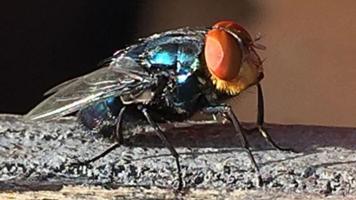
Physical description of a New World Screwworm:
Adult Fly
-
- Size: Slightly larger than a common housefly.
- Coloration: Metallic blue or blue-green.
- Eyes: Large and bright reddish-orange.
- Thorax: Features three distinct dark vertical stripes along the back.
- It is doubtful that you will ever see the adult fly of NWS since they are solitary insects and do not feed on livestock as adults. Males feed on flower nectar and females feed decomposing animals or wound liquid as they lay egg masses.
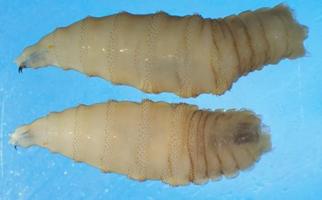
-
- Shape: Cylindrical and tapers to a point at one end, blunt at the other.
- Color: White to cream-colored.
- Distinctive Features: Surrounded by rings of dark, backward-projecting spines (giving it the "screwworm" appearance). Mature larvae can grow up to 2/3 of an inch in length.
- Internal Features: The final third of the body features pigmented internal breathing tubes (tracheal trunks) that appear as two dark vertical slits.
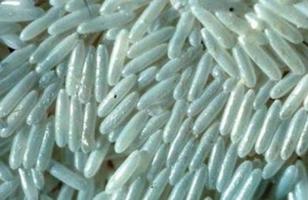
Eggs
- Appearance: Creamy white to pale yellow.
- Placement: Laid in shingle-like, tightly packed batches of 200 to 300 along the edges of open wounds or mucous membranes.
Posted: to Organic Production on Sun, Sep 6, 2026
Updated: Sun, Sep 6, 2026