Latest NODPA News
By Ris Pareti, NODPA Contributing Writer
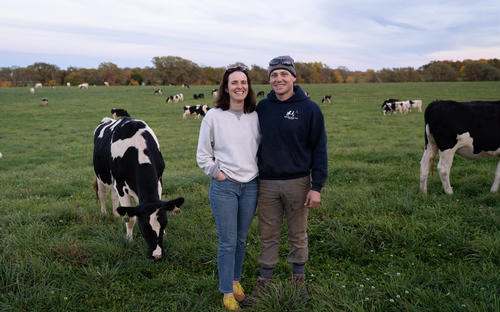
In 1956, Harold and Rose Gould had a dream: build and run their own dairy farm. Three generations later, Stephen Gould - their grandson - is keeping that dream alive. Stephen Gould runs HaR-Go Farm, an organic dairy in Pavilion, NY, with his wife, Jill Gould. “Being able to work together is special,” he shares in earnest.
Read More...
posted
to Featured Farms
on Sun, Sep 06, 2026
By Ed Maltby, NODPA Executive Director and Kathie Arnold, NODPA Policy Committee Chair
Producers need temporary variances. Farming is all about dealing with the unexpected, even more so with dramatic weather fluctuations in regions that have not experienced such a range of weather extremes. What starts as a drought year may change as the year progresses and equally the opposite.
Read More...
posted
to Industry News
on Sun, Sep 06, 2026
Guidance and worksheet for organic producers requesting a temporary variance from the USDA National Organic Program
Temporary Variance Guidance and Form: Guidance and worksheet for organic producers requesting a temporary variance from the USDA National Organic Program (NOP). This factsheet was produced by Organics Farmers Association, Western Organic Dairy Producers Alliance, NODPA working with the USDA National Organic Program. Occasionally, circumstances beyond an operation's control, such as drought or flooding, or on-farm research, may temporarily make compliance with certain organic requirements impossible.
Read More...
posted
to Industry News
on Sun, Sep 06, 2026
By Ed Maltby, NODPA Executive Director
The organic community has been grappling with what is the best, most transparent and inclusive process to make changes to modernize program oversight and verification that will support a highly credible but more affordable, competitive and inclusive organic market for producers and consumers. Is it better to make changes, legislatively, through the Farm Bill or by working with the National Organic Standards Board (NOSB) and the National Organic Program (NOP)? There are no shortcuts as both approaches take time, regulatory change and are subject to outside pressure. The organic community’s decision to make organic certification a federal regulatory process in 1990 means that any change will be slow and affected by the national politics of Congress and the administration.
Read More...
posted
to Industry News
on Sun, Sep 06, 2026
On Friday, 8/7/2026, the newly adopted NOSB Charter was posted on the USDA website at: https://www.ams.usda.gov/sites/default/files/media/NOSBCharter.pdf . The previous charter ended a few months ago and the NOSB cannot function without a current Charter which runs for 2 years. Although the NOSB was explicitly written into law by the Organic Foods Production Act (OFPA), it is governed by the Federal Advisory Committee Act (FACA), and all FACA committees must have a current Charter.
Read More...
posted
to Industry News
on Sun, Sep 06, 2026
By Lia Seeler, Western Organic Dairy Producers Alliance
Why It Matters: New World Screwworm (NWS) is a serious pest that can infect livestock, pets, wildlife, and occasionally people. The larvae feed on living tissue, causing severe wounds, animal suffering, production losses, and potentially death if left untreated.
Read More...
posted
to Organic Production
on Sun, Sep 06, 2026
By Ed Maltby, NODPA Executive Director
It’s official! The Northeast has had ‘limited rainfall in the past week, leading to degradations in drought’ (US Drought Monitor). This is a big difference from last year, with significant rain in many areas for improved grazing and forage production to take us into Fall. Not so good news is the price of diesel and the increasing costs of parts and equipment. Pay Price is holding steady, though some buyers are shifting to paying more for protein.
Read More...
posted
to Industry News
on Sun, Sep 06, 2026
By Ed Maltby, NODPA Executive Director
Total estimated sales of organic packaged fluid milk for May 2026 show a decrease of 1.00% over May 2025 sales, as conventional fluid milk sales in the same month also show a decrease of 2.2% over May 2025. June 2026 is better, with organic estimated sales at 3.4% higher than June 2025, and a 3.3% increase in conventional sales over June 2025.The USDA Agricultural Marketing Service (AMS) Market Information Branch published estimated national organic fluid milk product sales for May and June 2026, compiled with data from the Federal Milk Marketing Orders (FMMO).
Read More...
posted
to Organic Pay, Feed & Grain Prices
on Sun, Sep 06, 2026
By Siobhan M. Griffin
You have all seen the textbook drawing that depicts the succession of plants in temperate environments like ours – first lichen and moss colonize new ground and then annual forbs (weeds) appear. Soon newly established perennial grasses get invaded by shrubs and then dwarf trees. Eventually the ecosystem self organizes to closed canopy forest. That is what is supposed to happen, right? Think again.
Read More...
posted
to Organic Production
on Sun, Sep 06, 2026
By Brad Heins and Sabrina Florentino, University of Minnesota
Solar energy is becoming more common across rural landscapes, but many dairy farmers have an important question: What happens to the land underneath the panels? For pasture-based dairy farms, the answer could be agrivoltaics. Agrivoltaics combines agricultural production and solar photovoltaic energy generation on the same acres. Instead of removing land from farming, the land can continue to produce forage while also producing renewable energy.
Read More...
posted
to Organic Production
on Sun, Sep 06, 2026
By Nora Owens, NODPA Field Days Coordinator
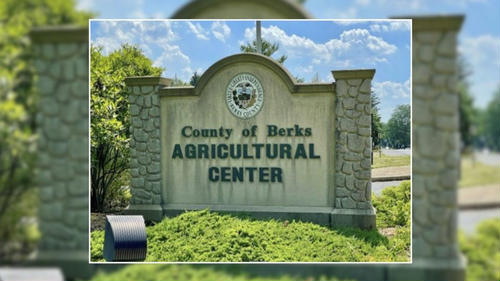
The 26th Annual NODPA Field Days is right around the corner and registration is open. The Early Bird special rate is available until Saturday, September 12th and you can register online or call/email to let us know you are coming in order to secure the best rates. You can pay in person but we need to know if you are coming. Also, we have a hotel block at the Holiday Inn Express, Wyomissing, PA that has an excellent rate until Friday, September 11, 2026. To learn more about the NODPA Field Days schedule, speakers, 2 farm tours, and to register and/or make hotel reservations, visit the webpage for more information and to register.. If you have questions or want to register by phone, call Nora Owens at 413-772-0444 or email noraowens@cast.net.
posted
to Field Days
on Sun, Sep 06, 2026